


Wildfire ash roof damage in Yakima builds up fast each smoke season. Here are 5 key tips to protect your roof and gutters before fall rain.
Wildfire ash roof damage in Yakima builds up faster than most homeowners expect once smoke season settles in over the valley. Ash is acidic and abrasive, and it works into shingle granules and gutters all summer long. After years inspecting roofs across the Yakima Valley, I have learned wildfire ash roof damage in Yakima is easiest to manage with a few simple habits. Here are five key tips.
Quick Answer: What Wildfire Ash Actually Does to a Yakima Roof
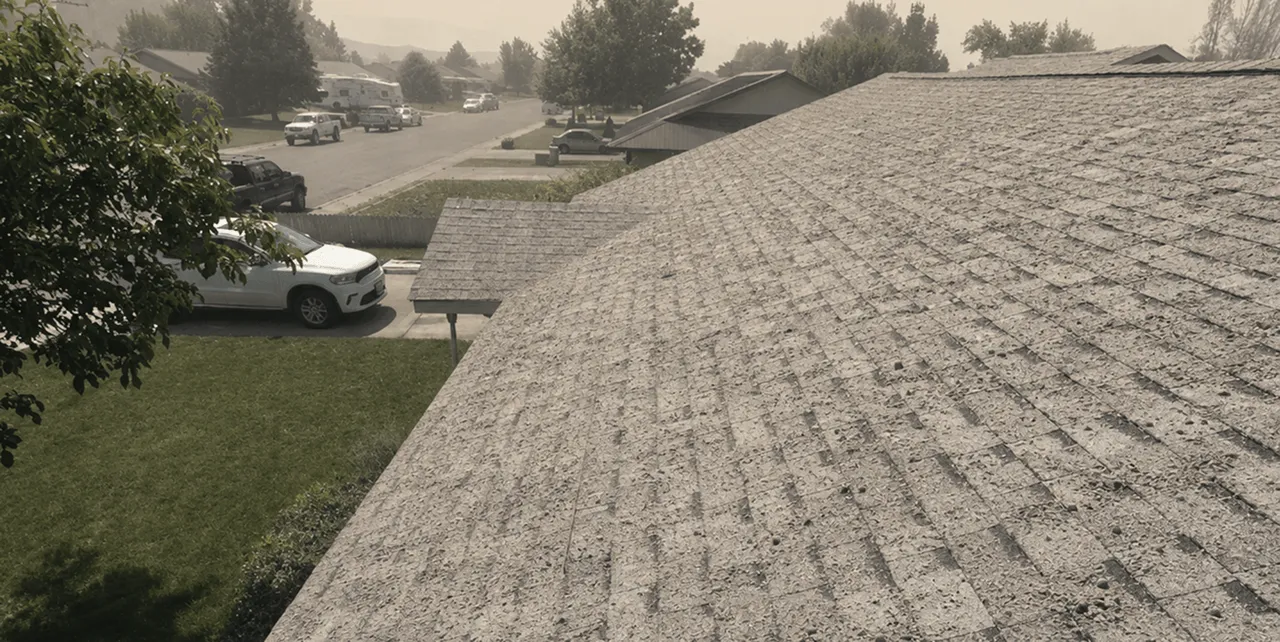
Wildfire ash is not just dirt sitting on your shingles. It carries acidic residue from burned material, and the particles themselves are fine and abrasive, closer to sandpaper dust than regular soil. Left on a roof through a full smoke season, ash embeds into shingle granules and slowly wears down the protective layer underneath. It also holds moisture longer than a clean shingle surface would, which can encourage early moss and algae growth in shaded valleys once the weather cools and rain returns. On top of the shingles themselves, ash packs into gutters and downspouts, and a clogged gutter during the first real fall rain sends water somewhere it should not go. Taken together, these effects are what add up to real wildfire ash roof damage in Yakima over a full smoke season.
What Homeowners in Yakima Usually Notice First
Most homeowners notice the gutters before they notice anything on the roof itself. A gray or black film builds up in the gutter trough, especially at low points and near downspouts, and it often clumps together after even a light morning dew. Some homeowners also notice faint discoloration streaks running down the shingles below a roof valley, where ash-heavy runoff concentrated during a brief shower.
I inspected a home in the West Valley area a couple of falls ago where the homeowner assumed the dark streaking on her north-facing slope was just normal aging. It was not ordinary aging. That slope stayed shaded most of the day, so ash that landed there through a smoky August sat wet and undisturbed far longer than the sun-exposed side of the same roof. Wildfire ash roof damage in Yakima tends to hit shaded, slow-drying areas hardest, which is exactly the opposite of where heat damage usually shows up first.
What a Roofer Looks For During a Post-Smoke-Season Inspection
On many roof inspections after a heavy smoke summer, we check specific spots that tell the real story, not just a glance from the ground.
First, the valleys. A roofer evaluates this by looking at how much ash has packed into the valley metal or shingle overlap, since valleys concentrate runoff and collect far more debris than a flat slope.
Second, gutter troughs and downspout screens. What homeowners often miss is that a gutter can look mostly clear from below while still being packed with compacted, wet ash further along the run, especially near elbows and downspout openings.
Third, granule wear under any visible ash layer. I brush a small test area clear and check whether the shingle surface underneath looks intact or already thinning, since ash sitting directly on the granules accelerates wear compared to a shingle that gets washed clean by regular rain.
Fourth, early moss or algae growth in shaded, ash-heavy spots, which shows up here months before it would on a sun-exposed slope with the same roof age.
Common Mistakes Homeowners Make With Wildfire Ash on a Roof
The biggest mistake is pressure washing the roof to clean it off. High-pressure water drives granules loose, forces water up under shingle laps, and can do more damage in twenty minutes than an entire smoke season of ash sitting there.
The second mistake is waiting until after the first real rain to deal with it. Dry ash rinses out of a gutter fairly easily. Wet, settled ash turns into a heavy paste that has to be dug out by hand, which takes far longer and is much harder on the gutters themselves.
The third mistake is treating wildfire ash roof damage in Yakima as a cosmetic issue only. The acidic residue and trapped moisture genuinely shorten a shingle's working life over several smoke seasons, even though nothing about it looks urgent in the moment.
The fourth mistake is only checking the parts of the roof visible from the driveway. Shaded, north-facing valleys tend to hold ash the longest and show wildfire ash roof damage in Yakima earliest, but they are also the hardest parts of the roof to see from the ground, which is exactly why they get skipped.
Deciding When to Clean It Yourself and When to Call a Professional
A light dusting of dry ash in easily reached, ground-level gutters is a reasonable do-it-yourself job with a hose and a stable ladder. Heavier buildup packed into roof valleys, steep pitches, or gutters you cannot safely reach is a different situation. Walking a roof to clear ash without knowing which areas are safe to step on risks both a fall and unnecessary granule loss from foot traffic on already-worn shingles.
A good rule of thumb is to judge the ash by how it behaves, not just how much of it there is. If it brushes away easily and leaves a clean gray dust on your hand, a simple gutter flush is usually enough. If it has already clumped, feels gritty and packed, or has started to hold a faint smell of standing water, that is a sign wildfire ash roof damage in Yakima has moved past the surface stage and is worth a proper inspection rather than a weekend cleanup.
Yakima's Wildfire Season: Why the Timing Matters
Smoke season in the Yakima Valley typically builds through July and peaks in August and September, often lingering into early October depending on the fire year. That stretch overlaps almost exactly with the hottest, driest part of the local calendar, which means ash tends to sit on a bone-dry roof for weeks before any rain washes it away naturally. The Yakima Valley's surrounding hills and orchard country also mean smoke and ash can settle in for days at a time even from fires burning well outside the immediate area, adding to the total ash load a roof sees over a full season. Wildfire ash roof damage in Yakima is really a timing problem as much as a weather problem. The ash arrives during the one stretch of the year when nothing is around to rinse it off on its own, which is why a mid-season check matters more here than in a wetter climate where occasional summer rain would do some of that work automatically.
Get Ahead of Smoke Season Before Fall Rain Hits
If your gutters or roof valleys have collected a season's worth of ash, it is worth getting a real look before the first serious rain packs everything down. Our Roof Inspections service checks valleys, gutters, and granule condition, and gives you a straight, written answer on what needs attention now versus what can wait. If you would rather talk it through in person, visit us in Kennewick, WA, and we can walk you through what a typical post-smoke inspection covers.
Smoke season leaves more than haze behind. Ask Terry for a quick post-smoke roof check.
QUESTIONS
FREQUENTLY ASKED QUESTIONS
It is more than cosmetic, even though it looks that way at first. Wildfire ash roof damage in Yakima comes from two things working together: the acid content in the ash and the abrasive texture of the particles, both of which work against the protective granule layer over time, while trapped moisture underneath can start early moss growth in shaded spots. None of this happens overnight, but it adds up over several smoke seasons.
Ground-level gutters with a light, dry ash layer are usually safe to flush yourself with a hose. Anything on the roof itself, especially in valleys or on steeper pitches, is safer left to a professional who knows where it is safe to walk and how to clear ash without scraping granules off the shingles in the process.
Yes. Dry ash rinses out fairly easily. Once it gets wet and settles, it compacts into a heavy paste that clings to gutters and shingle surfaces, which takes much longer to remove and holds moisture against the roof for a longer stretch of time.
Generally, no. Ash buildup is treated as ongoing environmental wear rather than a single covered event like wind or hail. We are a licensed, registered contractor, not an insurance agent, so we cannot make coverage decisions. We can document the condition with photos and a written estimate for you to bring to your insurer if you want a second opinion.
I recommend at least one mid-season check in August, on top of your normal fall cleanout, during any year with heavy regional smoke. That extra check catches ash before it compacts and gives your gutters a fighting chance once the first real rain arrives.
It can contribute to it, particularly on shaded, slow-drying slopes. Ash holds moisture against the shingle surface longer than a clean roof would, and that extra dampness is exactly the condition moss and algae need to get started, especially once cooler fall weather arrives.
Usually it takes more than one season to cause meaningful wear, but a single unusually heavy or long smoke summer can still leave a mark, especially on a roof that was already getting older. The real risk is the pattern repeating year after year without any cleanup in between, since each summer's ash adds to whatever residue was never fully cleared from the last one.

Terry Preston, Owner-Operator. Published August 2026.