



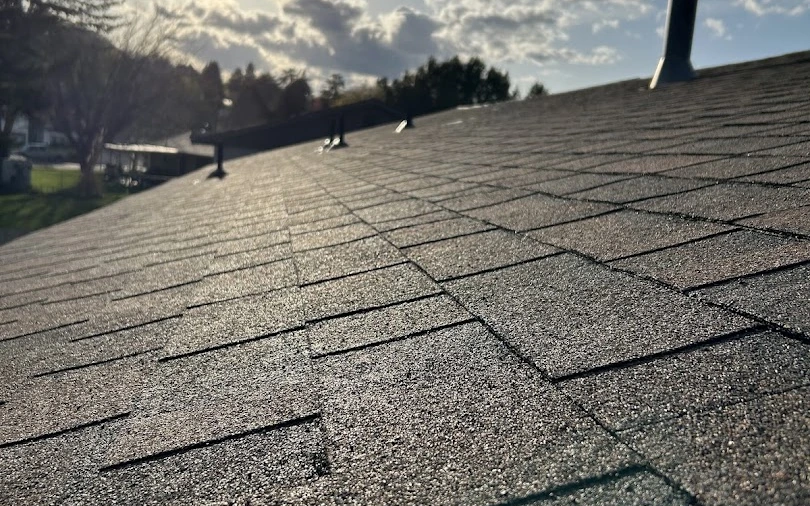
The wind off the Columbia Basin does more roof damage than most homeowners realize. Here is what to check after a big blow, and when a quick repair keeps a small problem from becoming a soaked ceiling.
Most homeowners picture roof damage as a dramatic thing. A branch through the attic, or shingles peeled off in a sheet. Out here it is usually quieter than that. The wind that runs off the Columbia Basin does not need a full storm to do real damage. A steady blow over an afternoon lifts the edge of a shingle that was already tired, works a loose nail looser, and pries at flashing that had been holding on out of habit. You do not see it happen. You find out weeks later, when the first real rain finds the gap.
I have roofed in this climate long enough to know the pattern. Here is what to look for after a big blow, and how to tell a quick fix from a real problem.
Why Tri-Cities wind is harder on roofs than it looks
Our roofs already take a beating from the sun. Months of high-desert heat dry out the asphalt and loosen the sealant strips that hold each row of shingles down. By the time a windstorm rolls through, a lot of roofs are half unglued to begin with. The wind gets under those loose edges and lifts. One gust rarely tears a shingle clean off. What it does instead is break the seal, so the shingle lays back down looking fine but is no longer bonded to the one below it. That is the damage that fools people. The roof looks normal from the street, then leaks the next time it rains.
What to check from the ground after a storm
You can catch most of the early signs without a ladder. Walk the whole property and look up at the roof from a few angles. Look for shingles that are missing, cracked, or curled at the corners. Look for a shingle sitting slightly proud of the ones around it, which is a sign the seal broke. Check the ground and the flower beds for shingle pieces or a pile of granules that washed down. Look at the metal around the chimney and the vents to see if anything has lifted or bent. Inside, check the ceilings of your upstairs rooms and the attic for any fresh staining or a damp, musty smell.
The damage you cannot see from the driveway
The parts of a roof that leak first are the parts you cannot see from the ground. Flashing is the metal that seals the joints around chimneys, skylights, and vents, and wind loves to work it loose. The valleys, where two roof planes meet and funnel water, take the hardest hits. And a broken shingle seal is invisible from below. This is why a proper look after a storm means getting on the roof and checking those spots directly, not just scanning for missing shingles from the lawn.
When a quick repair is enough, and when it is not
Most wind damage is a repair, not a replacement, if you catch it early. A handful of resealed or replaced shingles and some fresh flashing will hold for years. The trap is waiting. Once water has been getting past a broken seal for a season or two, it soaks the decking and the insulation underneath, and a repair that would have cost a few hundred dollars turns into a torn-off section and interior repairs on top. My rule is simple. If a repair will genuinely hold, that is what I quote. If the roof is too far gone to patch honestly, I tell you that instead of taking your money for a fix I already know will fail.
Get a straight answer, in writing
If you rode out a big blow and something looks off, do not wait for the next rain to confirm it. I will climb up, photograph the actual condition of your roof, and hand you a written report and a written estimate. That estimate is the price you pay. No upsells, and no surprise line items later. We are a local Tri-Cities roofer, not a storm-chasing crew that shows up after a wind and disappears before winter, so you get the truth about whether you need a repair or a replacement. Call High Point at (509) 518-0747 for a free inspection across Kennewick, Pasco, Richland, and West Richland.

Terry Preston, Owner-Operator. Published May 2026.